Most parents of middle schoolers want their kids practising more, and most middle schoolers want to practise less. The fight usually happens around how long. An hour feels reasonable to a parent and endless to a 12 year old.
The good news is that the right amount is a lot less than most people think, as long as it happens often.
Short and often wins
Learning research has a clear finding that applies directly to kids: practice spread over many short sessions sticks far better than the same amount of time crammed into one. It's called spaced practice, and it's one of the most reliable findings in how people learn.
In practice, that means:
- 10 to 15 minutes per subject, most school days, does more than a two-hour session on Sunday
- Mixing in older topics with the current one helps kids remember both
- Getting quick feedback on whether an answer is right matters as much as the time spent
A Grade 7 student who does 10 math questions a day, five days a week, practises about 200 questions a month. That's a lot of math, and none of it involves a meltdown.
A routine that sticks
Same time, every school day. Routines remove the argument. If practice always happens at 4:30 or right after dinner, it stops being a negotiation.
Keep it short enough that it gets done. A 10-minute task that happens every day beats a 45-minute task that gets skipped three days out of five.
Skip the days that should be skipped. PA days, holidays and March Break are breaks for a reason. A routine that respects them feels fair, and kids push back less.
Let them work alone. By Grade 6, kids should be doing practice on their own. Your job is to set it up and check the results, not to sit beside them.
Reward consistency, not just scores. Streaks and small rewards for showing up every day build the habit. Marks follow.
What about the weekend?
Weekends can be lighter. A quick review on Sunday is fine, but the real work is the weekday habit. If your child does a little every school day, weekend catch-up isn't needed.
Signs the routine is working
- Your child starts practice without being reminded
- Fewer "I don't get it" moments on topics you've practised
- Teacher comments mention more confidence or independence
- The fall-to-February report card shows steady or improving learning skills
How Homebell builds the routine for you
Homebell is built around short daily practice: one set at a time you pick, only on school days.
- Pick the grade, your board, and the subjects. Takes about five minutes.
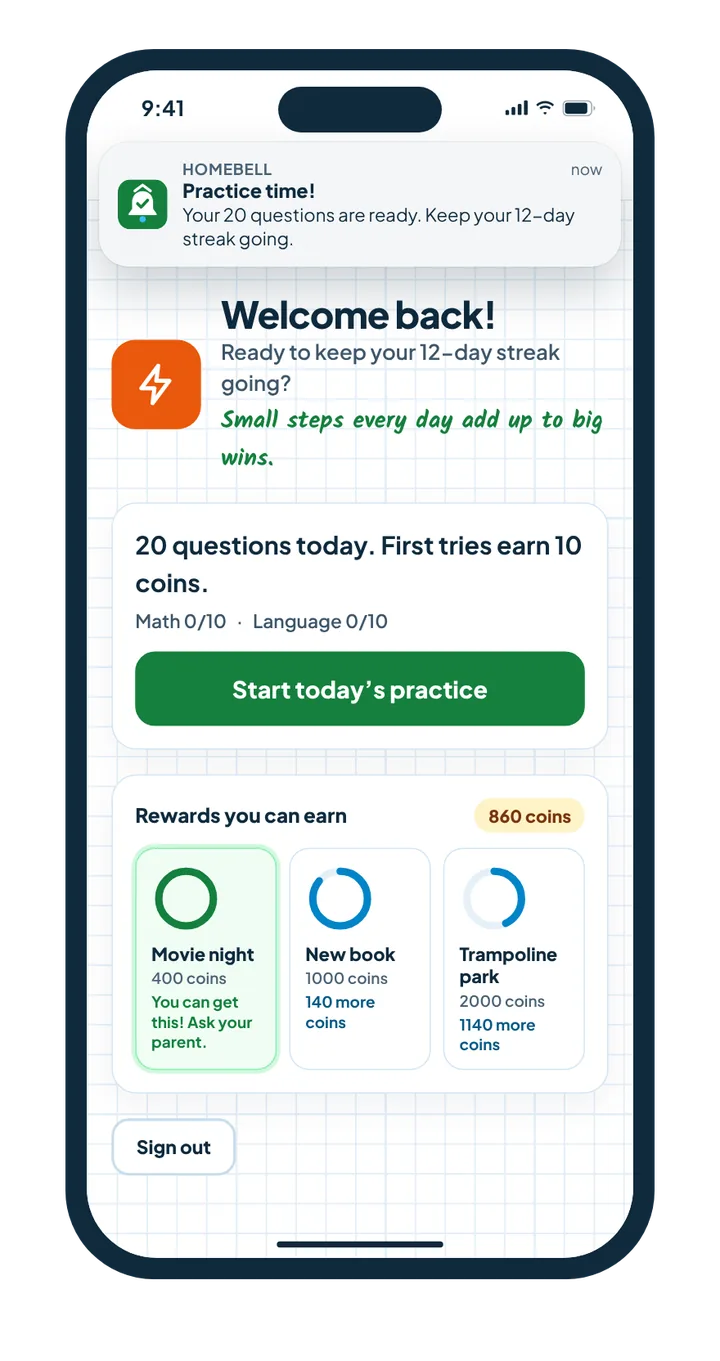
- Set the practice time. 4:00 pm is the default. Move it to 5:30 if there's after-school care or sports. Reminders come as an app notification, an email, or both.
- About 10 questions per subject arrive each school day, following the order topics are usually taught in Ontario for that grade. PA days and holidays on your board's calendar are skipped automatically.
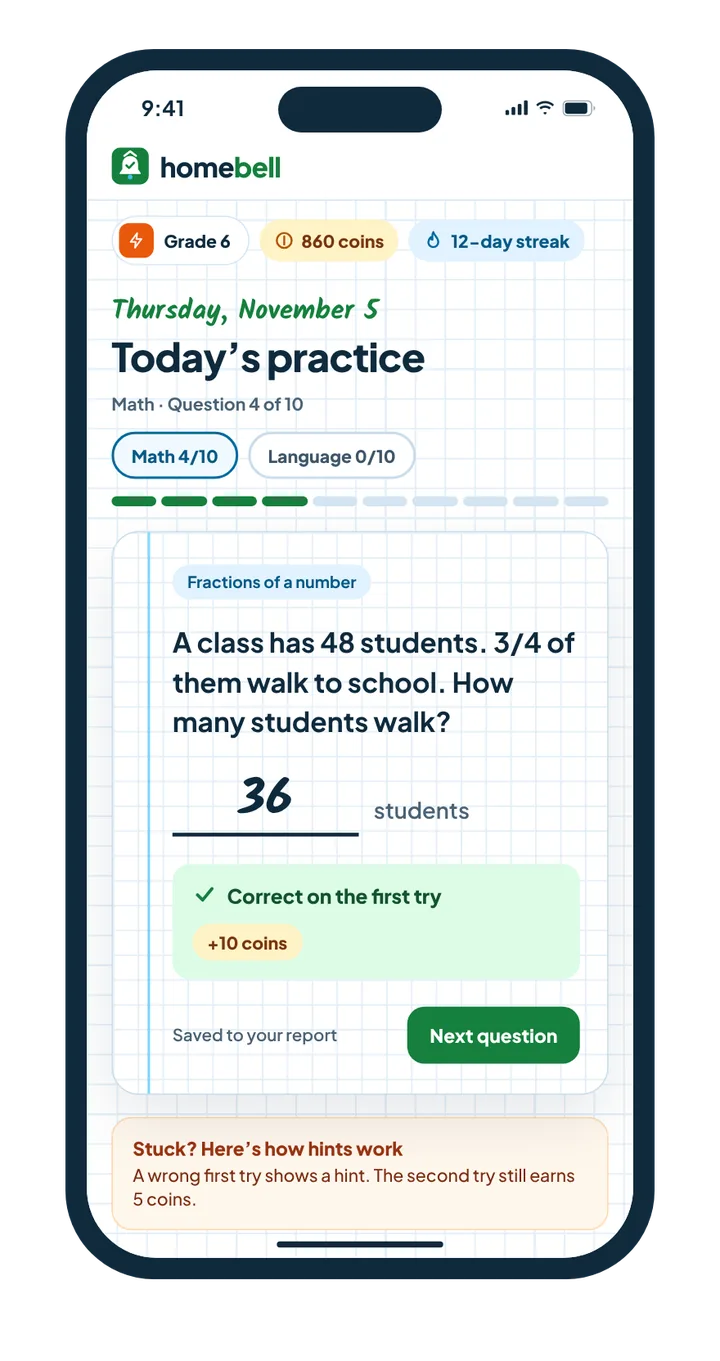
- Kids work on their own. Every answer is checked instantly with a hint and a second try. They earn coins and streaks, and you decide what the coins are worth: screen time, a treat, whatever works in your house.
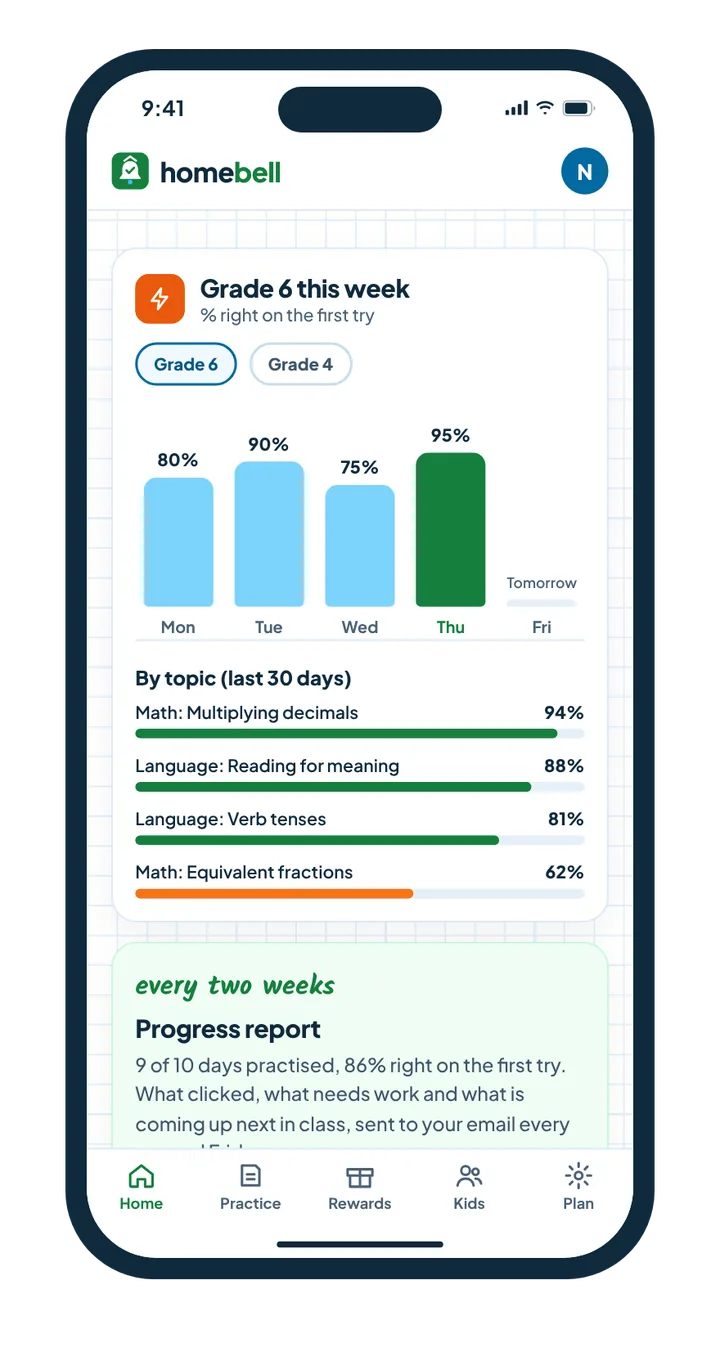
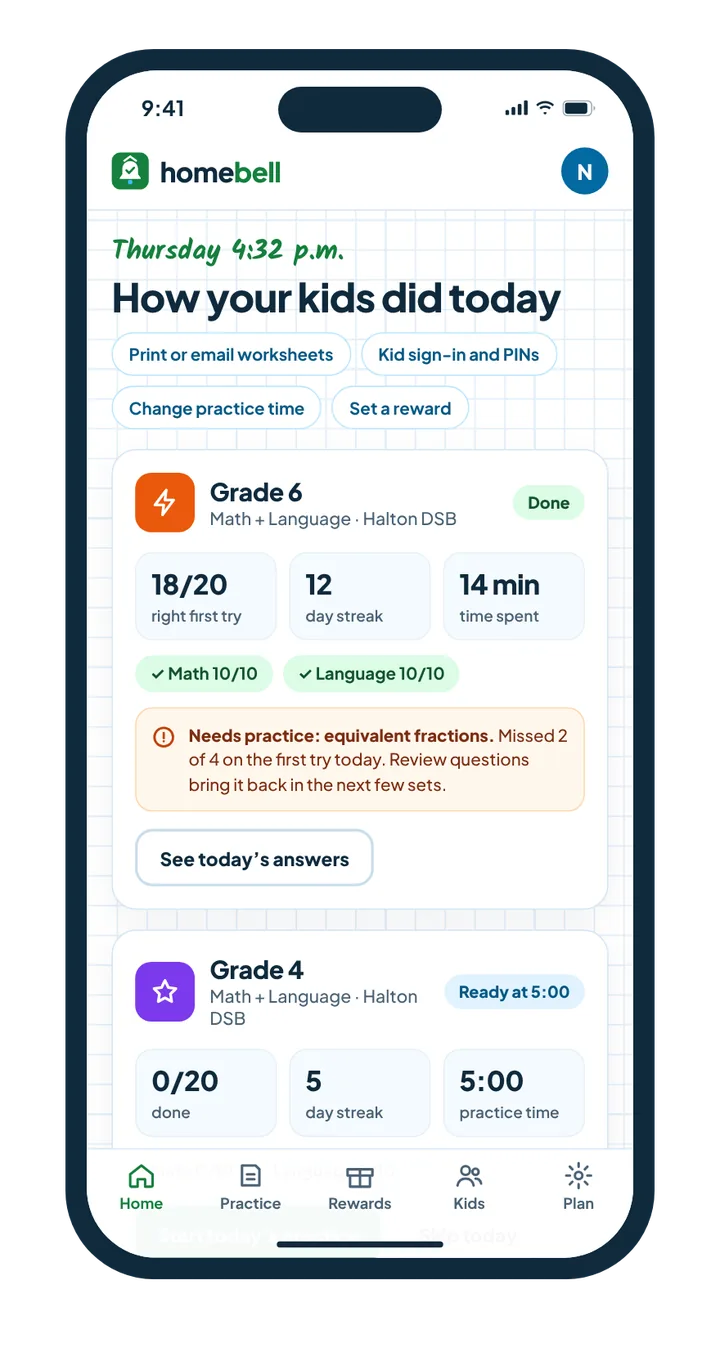
- You check the results in the parent dashboard, with a full progress report every two weeks.
Try it free for 7 daysNo card needed for the trial.
Quick answers
How long should a Grade 7 student practise each day?
About 10 to 15 minutes per subject on school days is enough for most students, as long as it's regular.
Should my child practise on weekends?
It's optional. A consistent weekday routine matters more.
Is it better to practise right after school or after dinner?
Whichever your family can stick to. Consistency matters more than the exact time.